Opening Opportunities: A Comprehensive Guide to the L1 copyright Process
The L1 copyright process offers a critical pathway for international business seeking to transfer vital workers throughout boundaries. Understanding the nuances of qualification standards, the differences between L-1A and L-1B visas, and the intricacies of the application process can substantially affect a candidate's success. Maneuvering this facility landscape is not without its obstacles, and mindful interest to documentation and company sponsorship is crucial. As we discover the vital elements of this procedure, the methods for overcoming possible challenges will become apparent, exposing exactly how informed preparation can open a globe of chances.
Recognizing the L1 copyright
Recognizing the L1 copyright entails recognizing its significance as an essential tool for international business seeking to transfer competent staff members in between worldwide workplaces. This non-immigrant copyright classification assists in the movement of executives, managers, and specialized expertise workers to the USA, thereby enabling companies to preserve operational connection and harness worldwide ability successfully. The L1 copyright is separated right into two key categories: L-1A for supervisors and executives, and L-1B for employees possessing specialized knowledge.The L1 copyright offers an essential function in improving a business's competitive side in the worldwide market. By allowing companies to move their essential employees, organizations can guarantee that crucial projects are managed by certified people who are currently accustomed to the firm's society and functional processes. What Is L1 copyright. This interior transfer mechanism not just fosters knowledge sharing yet also promotes development and cooperation throughout borders.Moreover, the L1 copyright is commonly favored for its reasonably straightforward application process contrasted to various other copyright classifications, as it enables dual intent, allowing holders to pursue permanent residency while on a short-lived job copyright. This attribute makes the L1 copyright particularly appealing for both companies and workers, as it improves the pathway for competent experts to establish long-lasting residency in the USA
Eligibility Standards
Qualification for the L1 copyright depends upon numerous crucial criteria that guarantee both the employee and the employer meet specific credentials. This non-immigrant copyright is designed for multinational business to move staff members from consular services to U.S. counterparts.Firstly, the employer needs to be a qualifying organization, that includes a moms and dad firm, branch, associate, or subsidiary of an U.S. company. The business needs to have been doing business for at the very least one year both in the united state and abroad. This assures that the firm has enough functional security and a legit presence.Secondly, the worker should hold a supervisory, executive, or specialized knowledge placement. For L1A visas, the candidate needs to show managerial or executive certifications, while L1B visas concentrate on specialized expertise related to the company's products, solutions, or processes. Furthermore, the staff member needs to have functioned for the international entity for at least one continuous year within the last 3 years before their application.Lastly, the worker's role in the U.S. should align with their previous position, ensuring that their skills and proficiency are leveraged for the company's benefit.
Types of L1 Visas
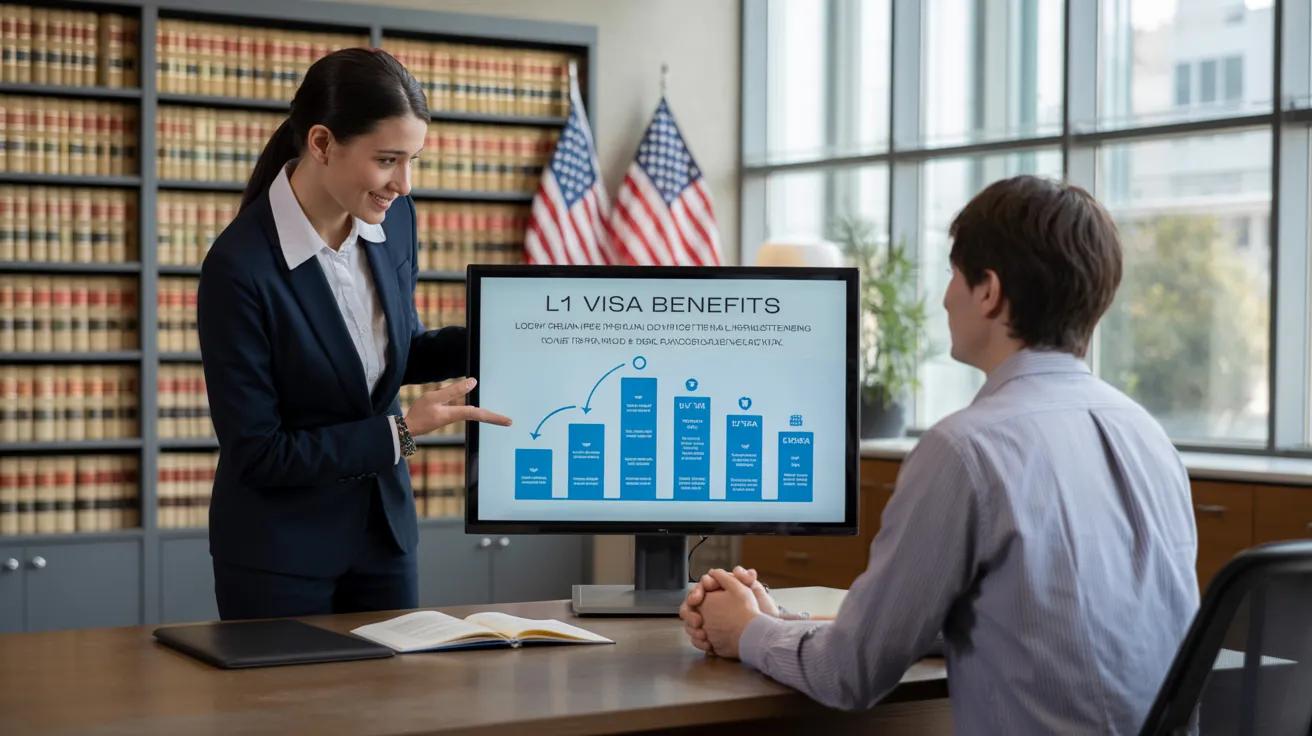
The L1 copyright category makes up two primary types created to assist in the transfer of staff members within international business: the L1A copyright for supervisors and execs, and the L1B copyright for employees with specialized understanding. Each type serves unique purposes and has particular qualification criteria.The L1A copyright is tailored for people that hold supervisory or executive positions within a business. This copyright allows top-level staff members to move to a united state branch, subsidiary, or associate of the exact same organization. Applicants for the L1A copyright should demonstrate that they have been utilized in a supervisory or executive capability for a minimum of one continual year within the past three years prior to their application. Additionally, this copyright supplies a longer duration of remain, originally given for 3 years, with the possibility of extensions for up to 7 years.In comparison, the L1B copyright is planned for experts with specialized understanding relevant to the firm's products, services, or procedures. To certify, candidates need to show that their proficiency is crucial to the company and that they have worked for at least one continual year within the last three years in a role that needed this specialized understanding. The L1B copyright is originally approved for 3 years, with extensions offered for as much as 5 years.Both copyright kinds are crucial for business seeking to enhance their international operations by leveraging experienced personnel, thereby promoting technology and efficiency within the U.S. market.
Application Process
Steering with the L1 copyright process includes a number of important steps that have to be meticulously complied with to ensure an effective end result. The procedure begins with the united state employer, that have to initially develop qualification by demonstrating a certifying connection with the foreign entity and validating that the employee satisfies the details demands for the L1 copyright category being sought.Once eligibility is confirmed, the company starts the process by filing Kind I-129, the Petition for a Nonimmigrant Worker, with the United State Citizenship and Migration Provider (USCIS) This type must be accompanied by a thorough summary of the job duties to be carried out, the organizational structure of both the united state and international entities, and the staff member's qualifications. It's essential to confirm that all information is precise and full, as omissions or mistakes can cause delays or denials.Upon approval of the I-129 petition, the following action includes the worker obtaining the L1 copyright at an U.S. consular office or consular office in their home country. This stage needs the conclusion of Kind DS-160, the Online Nonimmigrant copyright, and setting up an interview. During the interview, the candidate should offer evidence sustaining their credentials and the company's petition.After the copyright is provided, the employee can get in the USA to function in the marked function. Overall, careful prep work and adherence to every step of the application process are crucial for an effective L1 copyright outcome.
Needed Paperwork

Important Forms Required
Steering the L1 copyright procedure requires cautious focus to the vital types and documentation needed for a successful application. The key type needed is the Form I-129, Petition for a Nonimmigrant Worker, which have to be finished and sent by the united state company (L1 copyright). This type outlines the information of the employment offer and the credentials of the staff member seeking the L1 copyright.Alongside Type I-129, the applicant will certainly require to complete Kind I-539 if accompanying relative are additionally making an application for visas. Furthermore, the employer has to offer proof of the certifying connection in between the united state entity and the foreign entity, often requiring the submission of corporate records such as posts of unification or financial statements.Moreover, it is important to include the L Classification Supplement to Form I-129, which specifies the kind of L copyright being asked for-- either L-1A for supervisors and execs or L-1B for staff members with specialized knowledge. Lastly, candidates should ensure that all types are authorized and dated appropriately, as incomplete entries can result in delays or rejections. Effectively constructing these important forms lays the structure for a smoother L1 copyright process
Sustaining Evidence Requirements
Sustaining paperwork is necessary for an effective L1 copyright, as it confirms the cases made in the request. Applicants need to offer a variety of files to demonstrate qualification for the copyright, which is classified into two main types: evidence of the certifying connection between the U.S. and international entities and proof of the applicant's qualifications.To develop the partnership, candidates ought to submit paperwork such as corporate organizational charts, monetary declarations, and evidence of possession. These files validate that the foreign firm has a certifying relationship with the united state employer, whether as a parent company, subsidiary, branch, or affiliate.For the applicant's certifications, vital documents include an in-depth employment letter from the foreign employer, laying out the applicant's job title, responsibilities, and duration of work. Furthermore, academic credentials, such as degrees and diplomas, ought to be offered to show the candidate's knowledge in the appropriate area.
Employer Sponsorship Documents
Employer sponsorship records play a crucial duty in the L1 copyright procedure, as they validate the united state company's commitment to the applicant's employment in the United States. These files are important for showing the company's qualification to sponsor the candidate for the L1 copyright.Key documents generally required consist of a thorough work letter from the united state employer, which details the work title, obligations, and the nature of the work connection. Additionally, the company must supply proof of the company's legitimacy, such as business licenses, tax obligation returns, and business charts, illustrating the connection in between the united state entity and the international company.Furthermore, proof of the worker's qualifying relationship with the international firm is required. This may consist of documents evidencing the worker's role in the international entity, such as pay stubs, employment agreement, or performance analyses.
Typical Challenges
Steering the L1 copyright process provides a number of common challenges that applicants must recognize (L1 copyright Requirements). Key issues usually include stringent paperwork needs, possible hold-ups in processing times, and the need for strict legal conformity. Comprehending these challenges can help candidates much better prepare and mitigate risks throughout their copyright journey
Paperwork Needs
The L1 copyright process frequently presents significant obstacles associated with documents demands. Applicants need to supply considerable paperwork to develop qualification, which can result in complication and possible delays. Secret files consist of proof of a qualifying partnership between the united state and international employer, proof of the candidate's work background, and in-depth details concerning the work role in the U.S.One common difficulty is gathering enough proof to show the nature of the certifying relationship. Business often struggle to present clear business graphes or economic statements that show the connection between the entities. Additionally, ensuring that letters of assistance from employers precisely show the candidate's job tasks and certifications is necessary, as unclear summaries can result in denials.Another problem occurs from the requirement for thorough work summaries that straighten with the L1 copyright groups. Candidates must express not just their existing role yet also their managerial or customized understanding responsibilities clearly. This demands a detailed understanding of both the candidate's setting and the regulatory language used in L1 applications.
Processing Dead Time
Experiencing hold-ups in handling times is a typical challenge encountered by L1 copyright candidates, typically leading to aggravation and unpredictability. A number of elements add to these delays, including high application volumes, increased analysis of applications, and management stockpiles within the united state Citizenship and Migration Services (USCIS) Applicants might discover that handling times can vary significantly depending on the service center handling their application, as each facility has its very own workload and efficiency degrees. In addition, the complexity of the candidate's instance, such as the need for considerable documentation or explanation, can even more expand wait times.In some instances, problems related to the candidate's existing migration standing or previous copyright history may also bring about extra hold-ups, as USCIS may call for additional evaluation or info. It is important for prospects to remain positive during this period, keeping open communication with their employers and legal reps to attend to any possible issues promptly.Understanding these handling time difficulties can assist L1 copyright applicants get ready for feasible delays and alleviate the effect on their shift and occupation plans. Perseverance and diligence are necessary merits in maneuvering this detailed procedure.
Lawful Conformity Issues
Numerous L1 copyright candidates encounter legal compliance concerns that can complicate their trip toward acquiring the copyright. Recognizing and sticking to the certain laws set by the U.S. Citizenship and Migration Services (USCIS) is crucial. Typical challenges include demonstrating the certifying relationship between the international and U.S. employers, as well as verifying that the candidate has the requisite specific expertise or managerial capacity.Additionally, applicants have to offer extensive paperwork detailing their work responsibilities, business structure, and financial practicality of the united state entity. Insufficient or incorrect documents can lead to hold-ups or perhaps denials. Companies must additionally assure that they follow labor legislations, consisting of wage and functioning problem standards, which can impact copyright eligibility.Another usual problem includes preserving conformity with the regards to the copyright once given. Adjustments in work status, task obligations, or business framework can necessitate modifications to the copyright, which otherwise addressed quickly can lead to lawful complications. As an outcome, remaining educated concerning conformity requirements and seeking legal advise when necessary is necessary to browse the complexities of the L1 copyright process successfully.
Tips for Success
Success in the L1 copyright process often copyrights on careful preparation and interest to detail. To enhance your opportunities of authorization, start by thoroughly recognizing the eligibility requirements for both the L1A and L1B copyright classifications. Assess whether your position at the company qualifies as supervisory, exec, or specialized understanding, as this classification especially explore your L1 copyright influences your application.Next, gather extensive paperwork that corroborates your cases. This consists of organizational graphes, thorough task descriptions, and proof of the company's functional structure. Clear and concise proof of the qualifying relationship in between the united state entity and the foreign entity is important. Confirm that all records are organized practically and provided in a professional manner, as this mirrors your dedication and severity about the application.Engage the services of a knowledgeable immigration lawyer that focuses on L1 visas. Their expertise can verify vital, guiding you via complex policies and guaranteeing that all paperwork follows existing regulations. In addition, prepare for the interview by practicing response to usual concerns and being prepared to review your role and contributions to the company comprehensive.
Often Asked Concerns
Can Household Members Come With the L1 copyright Owner?
Yes, relative of L1 copyright owners, consisting of spouses and single children under 21, can go along with the main copyright holder. They might additionally get L2 visas, which enable them to stay in the USA.
Exactly How Lengthy Can I Remain on an L1 copyright?
The L1 copyright allows initial stays of up to three years, with the possibility of extension. L1A copyright owners might remain for a maximum of 7 years, while L1B copyright holders can continue to be for 5 years.
Can L1 copyright Holders Make An Application For an Eco-friendly Card?
Yes, L1 copyright holders can request an environment-friendly card. They may seek irreversible residency with employment-based categories, normally needing sponsorship from their employer, offered they satisfy the necessary certifications and paperwork needs.
What Occurs if My L1 copyright Is Refuted?
If your L1 copyright is refuted, you may receive a notification describing the reasons for rejection. You can seek to appeal the choice, reapply, or check out alternate copyright options based upon your circumstances.
Exist Any Type Of Traveling Constraints With an L1 copyright?
An L1 copyright normally permits for global travel; however, re-entry to the united state is contingent upon maintaining legitimate status. Vacationers need to assure conformity with copyright conditions to prevent complications upon return
Verdict
Comments on “Get L1 copyright”